VoIP vs Mobile Numbers for SMS Verification: What Actually Matters
On this page
Two number providers can both advertise “SMS verification” and still give you very different things. One offers a VoIP line. Another uses a carrier mobile number. Either service might give you a private inbox or let everyone read the same messages.
It is understandable to want one clear label that tells you what will work. Unfortunately, “real,” “virtual,” “free,” and “premium” do not answer the same question.
Before choosing a number, separate its line type from who can access it. Then check what the website requesting your number actually requires. This guide helps you compare those choices before you pay for something you do not need.
Start with two questions, not one label
The first question is about the number: is it a mobile line or a VoIP line? The second is about access: is the inbox yours to control, or is it shared?
These are independent properties. A SIM-backed mobile number can have a public inbox. A VoIP number can have an inbox accessible only to its subscriber. “Private” does not automatically mean mobile, and “mobile” does not automatically mean private.
| What you are comparing | What it tells you | What it does not tell you |
|---|---|---|
| Mobile or VoIP | The phone line’s classification. | Whether the inbox is public or a particular website accepts it. |
| Public or private | Who can read the messages. | Whether the line is mobile or VoIP. |
| Free or paid | What the provider charges. | The line type, acceptance by another service, or how long you control the number. |
| Temporary or ongoing | The service’s intended duration and access arrangement. | A guaranteed period of availability unless the provider expressly offers one. |
Keeping these questions separate makes a confusing comparison much easier. You can decide which properties your task needs instead of assuming an expensive number includes them all.
What mobile, VoIP, and SIM-backed mean here
Phone-number information services distinguish mobile lines from VoIP lines. For example, Twilio’s line-type documentation lists mobile, fixed VoIP, and non-fixed VoIP as separate classifications. An online inbox’s appearance does not tell you which classification its number has.
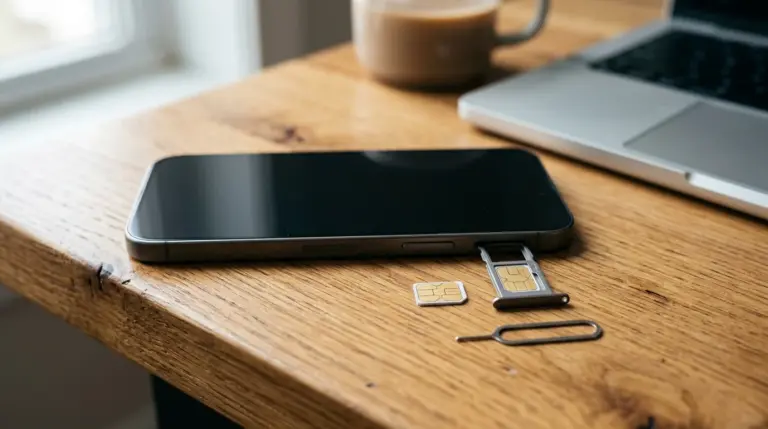
On FreeUSSMS, “SIM-backed” describes our use of US mobile numbers supported by physical SIM cards. You read their incoming messages through the website; you do not receive a SIM card of your own. Our SIM-backed inbox explanation describes that arrangement.
A useful clarification: a physical card is not the only way to use a carrier mobile service. An eSIM is a digital SIM, as explained in Apple’s eSIM guide. “No plastic card” is therefore not enough to conclude that a number is VoIP. Likewise, reading a message in a browser does not turn a mobile number into a VoIP number.
Why a verification form may care about the line type
A website can specify which number types it accepts for verification. If its rules exclude VoIP, the fact that your VoIP line receives ordinary texts does not satisfy that requirement.
Microsoft’s verification-code documentation gives a concrete example: it excludes VoIP numbers for the sign-in and verification uses described there. This is an example of a published policy, not a claim that FreeUSSMS has tested or supports a Microsoft registration flow.
That distinction matters when comparing providers. First establish the sending website’s requirement. Then ask whether a candidate number meets it. If you are already stuck waiting for a code, our article on virtual numbers that are not receiving verification SMS focuses on that specific problem.
Ask these questions before paying for a number
- What line type is being supplied? Look for a clear answer about mobile versus VoIP, rather than relying on “premium” or “verification-ready.”
- Who can read the inbox? A real mobile line can still be shared with other visitors.
- What happens after today? Check whether access continues, requires renewal, or ends when a number is removed. See what happens when a temporary number is replaced.
- What does the sending service permit? Its published requirements still apply, regardless of the price you paid.
These questions also help when a provider advertises a free option. Free access can be useful without including exclusive ownership or permanent availability. Knowing the arrangement upfront prevents an avoidable surprise later.
Where FreeUSSMS fits
FreeUSSMS combines US mobile numbers backed by physical SIM cards with free, public web inboxes. You can browse available numbers and read their messages without buying a number, subscribing, or installing an app.
That is useful when a permitted, temporary task needs a public mobile inbox. The inbox remains shared, and choosing a number does not reserve it. For a private business account, personal email, or future password recovery, choose a number you control over time.
Our public-versus-private inbox guide explains access and privacy in more detail. If temporary access fits your task, browse the currently available US numbers. You should be able to tell what you are getting before you spend money or depend on a number.